
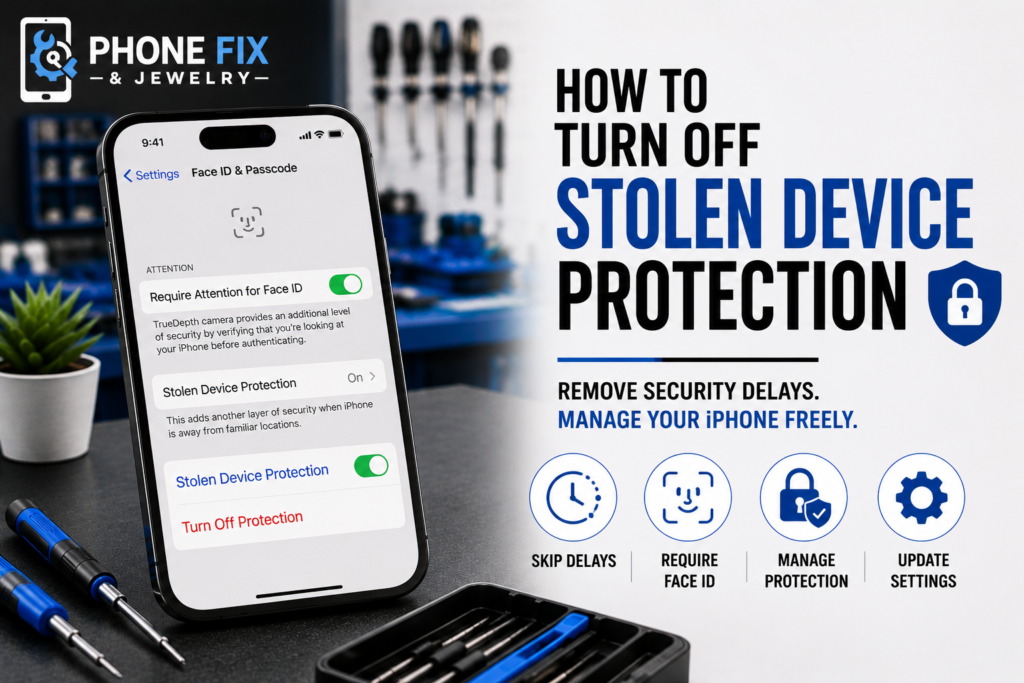
Have you ever tried changing your security settings and got blocked? Learning how to turn off stolen device protection stops unexpected delays on your phone. Apple added this feature to stop phone thieves from changing passwords. Many people get stuck when changing settings away from home locations.
The system makes you wait a full hour before making changes. This quick guide shows you simple ways to handle security locks. You will learn easy steps to update your device settings safely.
Simple Steps to Change Security Settings
Changing your device settings takes only a few quick taps. You must open your main menu options to start this process.
- Open Main Settings: How to turn off stolen device protection starts inside your main system menu.
- Select Face ID: Tap the Face ID and Passcode tab to proceed.
- Scan Your Face: Complete a biometric scan to view hidden security options.
- Find Protection Menu: Scroll down to locate the security protection toggle switch.
- Tap Off Switch: Click the toggle to begin the security removal process.
Why Security Delays Lock Your Menu
Apple built a strict safety delay into modern mobile software systems. Here are three main reasons your device starts a long countdown.
Away From Familiar Places
Your phone checks your physical location using cell towers and Wi-Fi. When you are far from home, the phone stays extra cautious. It starts a sixty-minute delay before letting anyone change passwords.
Unrecognized Local Networks
Connecting to public Wi-Fi networks in coffee shops triggers high security. The system thinks a stranger might have taken your unlocked phone. It forces you to wait before altering core account settings.
Broken Biological Scanners
If your camera lens gets cracked, biological face scans will fail. The software will not let you bypass settings using passcodes alone. You must repair camera hardware to pass safety checks quickly.
Alternate Ways to Manage Device Safety
When standard steps stall, you can use other methods to manage your phone. Try these practical steps to handle active security features.
- Return to Home: How to turn off stolen device protection without waiting an hour works best at home.
- Fix Broken Glass: Turning off stolen device protection without Face ID needs working camera parts.
- Update Old Models: How to turn off stolen device protection on an iPhone 11 uses standard passcode menus.
- Check Location Services: Keep location settings active so your phone recognizes familiar places.
- Manage Cloud Accounts: Sign into cloud web pages to track or erase lost phones.
Fix Security Setting Issues on Specific Models
Different phone models handle advanced software security options in unique ways. Knowing your specific model helps you fix menu problems much faster.
Handling Security on iPhone 15 Models
The how to turn off stolen device protection without face id iphone 15 process needs a working camera lens. If your front glass breaks, sensor arrays fail to scan your face. You must fix broken screen glass to access hidden system settings.
Dealing With iPhone 16 Security Tools
Using how to turn off stolen device protection without Face ID iPhone 16 options requires valid account credentials. New software limits passcode overrides when safety features stay active. Keeping your location settings active prevents long security delays at work.
Legacy Device Security Settings
Searching how to turn off stolen device protection without Face ID iPhone 13 brings up standard menu steps. Older units like how to turn off stolen device protection without Face ID iPhone 14 or how to turn off stolen device protection without Face ID iPhone 11 use similar menu locations.
Technical Details Behind Mobile Protection Tools
Understanding how modern software locks protect personal files helps you avoid annoying menu delays. Mobile operating systems combine hardware chips and cloud services like an Apple Account to protect your private pictures, banking apps, and saved passwords.
When you turn on advanced protection, your device creates a secure hardware vault inside its main processor. This vault stores your passcodes and biological data separately from normal phone apps. Even if someone knows your screen lock numbers, they cannot open account settings without passing a live face scan.
The system relies on background location tracking to know where you live and work. It logs your daily movements to identify trusted locations automatically. When you stay inside a trusted area, system settings change instantly without forcing long countdowns.
Leaving trusted areas changes how your phone handles security requests. Changing account passwords, viewing saved credit card details, or turning off location tracking requires biological authentication. If you try turning off safety features in an unknown place, a security delay timer begins.
The security delay gives real owners time to mark lost devices using web browsers. Once the timer starts, your screen displays a countdown notice. You can use your phone normally during this hour, but core security settings stay locked until time runs out.
When the hour timer ends, you must complete a second face scan to finish changing settings. This two-step process stops thieves from using stolen phones, but it can confuse real owners who need fast repairs.
Handling Failed Scans and Damaged Hardware
Physical drops and liquid spills often damage the delicate camera sensors sitting behind your front screen glass. When these optical components fail, your phone cannot perform the biological scans needed to turn off safety settings.
A cracked upper screen blocks infrared light from reaching your face. Dirt, oil, and deep glass scratches also disrupt delicate scanner beams. If your front glass breaks or camera sensors fail, you can get fast, reliable Smartphone Repair at our Alexandria store to restore your Face ID features.
Software glitches can also cause biological scanners to stop working suddenly. System updates sometimes fail to install properly, leaving camera drivers unresponsive. Restarting your device clears temporary system cache files and restores normal scanner performance.
If a soft system restart does not fix camera errors, your front display panel likely needs physical repair. Technicians must open your phone frame to replace broken glass and clean dirty optical lenses.
Never try opening phone cases at home without proper tools and training. Small ribbon cables inside display assemblies tear very easily during DIY teardowns. Damaging internal cable connectors can permanently destroy biological scanning features on your device.
Professional repair shops use specialized heating pads and suction tools to open phone frames safely. They align replacement glass components perfectly so optical camera arrays focus properly again.
Preparing Your Phone for Professional Repairs
Repair technicians need full access to system menus to test screen touch features, speaker output, and camera focus. Active protection features block technicians from running full diagnostic tests on your hardware.
You should turn off safety features before bringing your phone into a local repair shop. Doing this at home avoids the one-hour security delay while sitting inside the store.
If your front screen glass breaks completely, you cannot tap setup options on display panels. In these cases, repair teams must replace damaged glass before running menu diagnostics. To learn more about our experienced technical team and store location, feel free to visit our About Us page before stopping by.
Back up your personal data to cloud storage before handing your phone over for repairs. Keeping fresh data backups protects your photos, contacts, and personal text messages from accidental loss during technical service.
How Phone Fix & Jewelry Can Help You
Phone Fix & Jewelry helps you fix device problems in Alexandria, VA. Their experienced team repairs cracked screens, dead batteries, charging ports, and broken water seals. They test every single feature before you leave the store. You get a written warranty on all parts and labor. Their shop sits at 504C S Van Dorn St with free parking right out front. They stay open seven days a week for fast repairs. Most phone fixes are finished while you wait inside the store. Call (703) 328-0514 today to speak with friendly repair experts.
Conclusion
Managing your security features keeps your phone running smoothly every day. You can change your security settings at home without long delays. Turn off protection features before giving your phone to repair shops. If broken glass or bad sensors stop your screen from working, visit Phone Fix & Jewelry in Alexandria. Their expert team handles screen replacements, battery installs, and technical fixes fast. Call or visit their Van Dorn store today.
FAQs
Why is my iPhone stuck on stolen device protection?
Your device is away from home or starting a security delay. Wait for the timer or return to a familiar location.
Why is stolen device protection turned on?
Apple turned this feature on during system updates to protect user accounts. It stops strangers from changing your account passwords.
How to turn off Face ID if Face ID is not working?
You must repair broken screen glass or camera sensors first. A working camera is needed to turn off biological security features.
What is iPhone stolen device protection?
It is a safety layer that requires biological face scans for account changes. It adds a one-hour delay when away from home.
How do I remove stolen device protection off my iPhone?
Open Settings, select Face ID and Passcode, enter your lock code, and tap How to Turn Off Stolen Device Protection to switch it off.